
The Journal 3 min read
Phototoxic Essential Oils: Which Ones to Keep Out of the Sun
Some essential oils make your skin burn in sunlight. Here's the full list of phototoxic oils, citrus and beyond, the science behind it, and the citrus oils that are actually safe.
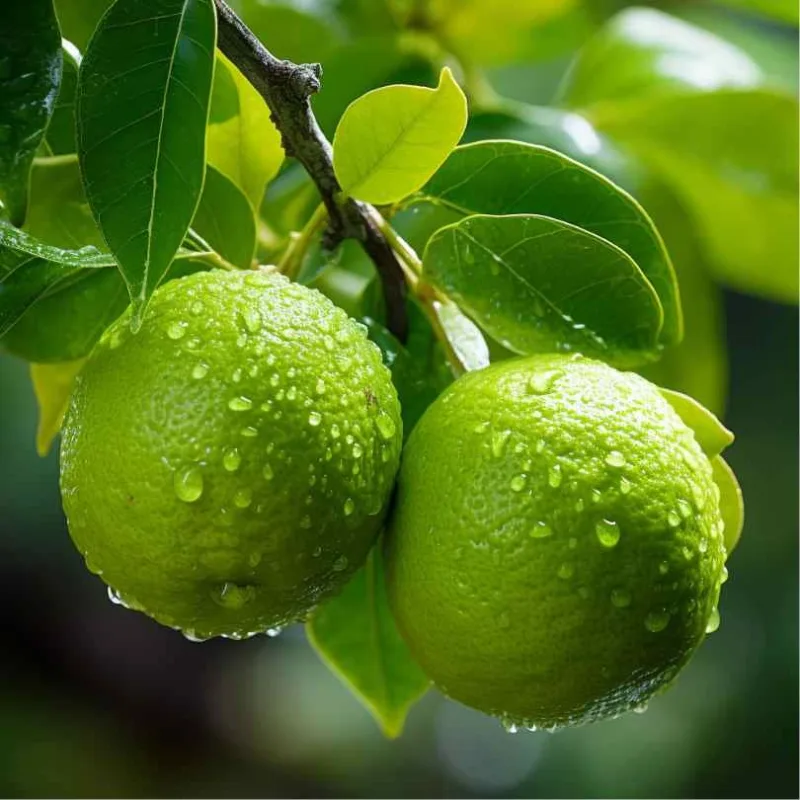
Phototoxicity is the one essential-oil safety issue that catches people out most often. Apply the wrong oil, step into the sun, and you can end up with an exaggerated burn or lasting dark patches, a reaction that has nothing to do with having “sensitive skin.” Here’s which oils to watch, why it happens, and which citrus oils you can use freely.
What phototoxicity actually is
Certain oils contain furanocoumarins (like bergapten), molecules that sit in the skin and react when hit by UV light, damaging skin cells directly. It’s a photochemical reaction, not an allergy, so it can happen to anyone. Controlled phototoxicity testing established the effect decades ago, and it’s now the single strictest limit the fragrance industry places on citrus oils.
The key point: the risk is skin + later UV exposure. Diffusing these oils, or using them in wash-off products, carries no phototoxic risk. It’s leave-on skin use before going outside that matters.
The strongly phototoxic oils
These deserve real caution, dilute low and keep treated skin out of sun/UV for 12–18 hours:
- Bergamot, the most phototoxic common oil; see our deep dive on bergamot and bergapten. A bergapten-free (FCF) version removes the risk.
- Lime, cold-pressed lime is even more sun-sensitising than lemon, as composition work on expressed lime reflects.
- Lemon, cold-pressed lemon is confirmed phototoxic in controlled testing.
- Angelica, the one non-citrus surprise: angelica root oil carries furanocoumarins and is phototoxic (angelica seed oil is not).
- Rue, phototoxic and outright toxic; a specialist, high-caution oil.
The mildly phototoxic ones
Still worth a sun-free window after skin use, but lower risk:
- Grapefruit, mildly phototoxic; about 12 hours out of the sun is prudent.
- Jade Lemon, a lemon-type citrus, so treat it like lemon.
- Lemon Verbena, flagged as phototoxic and a citral sensitiser, so keep leave-on use minimal.
The citrus oils that are actually safe
Not every citrus oil is phototoxic, these are generally fine:
- Sweet Orange, cold-pressed sweet orange is one of the few citrus oils considered non-phototoxic.
- Tangerine / Mandarin, also generally non-phototoxic.
- Steam-distilled citrus, distillation leaves the heavy furanocoumarins behind, so distilled lemon or lime is sun-safe when you need it.
The simple rules
- If you apply a phototoxic oil, keep that skin out of the sun and off the sunbed for 12–18 hours.
- Dilute, the risk scales with concentration.
- Diffuse freely, airborne use is never phototoxic.
- When in doubt, reach for sweet orange or tangerine, or a bergapten-free / distilled version.
Bottom line
A handful of oils, led by bergamot, lime, and lemon, plus angelica root and rue, turn sunlight against your skin. Respect the 12–18 hour rule, dilute, and lean on the non-phototoxic citrus oils when you’ll be outdoors.
References
- Testing citrus oil for phototoxicity, Food and Cosmetics Toxicology (1980). doi:10.1016/0015-6264(80)90227-8
- Naganuma et al. (1985), phototoxicity of expressed lemon oil, Archives of Dermatological Research. doi:10.1007/bf00412492
- Chisholm et al. (2000), composition of expressed lime peel oil, Journal of Essential Oil Research. doi:10.1080/10412905.2000.9712040
- Njoroge et al. (2012), grapefruit peel volatiles, Journal of Essential Oil Bearing Plants. doi:10.1080/0972060x.2012.10644122
- Composition of Angelica archangelica root oil (1997), Journal of Essential Oil Research. doi:10.1080/10412905.1997.10554250
- Tunisian Ruta graveolens essential oil (2012), Journal of Essential Oil Bearing Plants. doi:10.1080/0972060x.2012.10644047
This article is educational and not medical advice.