
The Journal 4 min read
Is Bergamot Oil Phototoxic? What the Science Says (and How to Use It Safely)
Bergamot smells incredible, and it's the most sun-sensitising citrus oil there is. Here's the science behind bergapten, the real safety limits, and how to use bergamot without burning your skin.
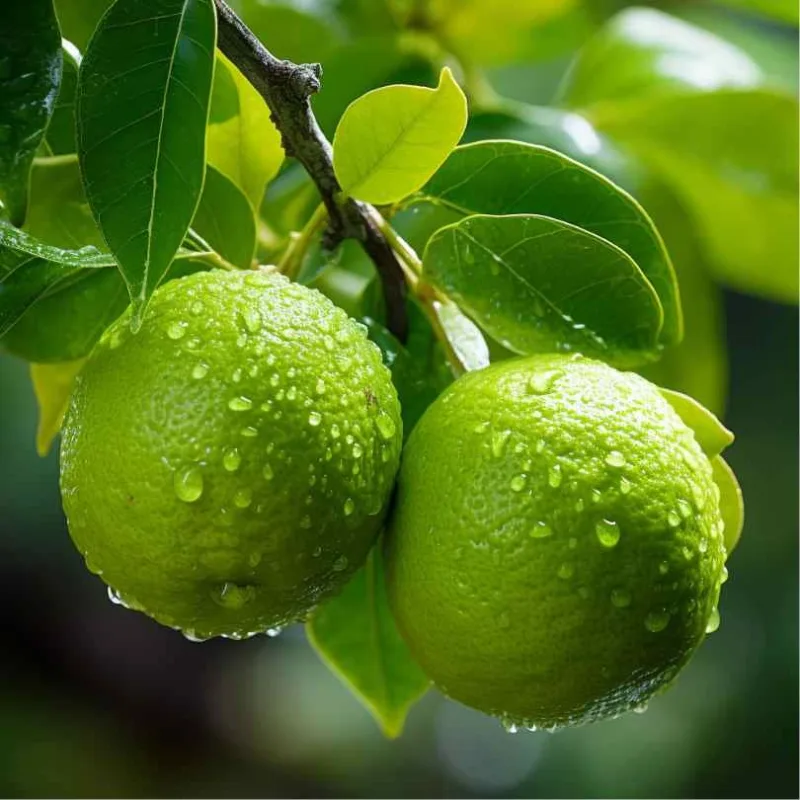
Bergamot is the bright, floral-citrus note behind Earl Grey tea and a favourite in uplifting diffuser and perfume blends. It also carries a genuine catch that most product labels underplay: applied to skin and then exposed to sunlight, bergamot is strongly phototoxic, more so than any other common citrus oil. Here’s what that actually means, what the research shows, and how to enjoy bergamot without a burn.
The culprit: a molecule called bergapten
Cold-pressed bergamot peel oil contains bergapten (5-methoxypsoralen, or 5-MOP), a furanocoumarin that occurs naturally in the peel. Researchers identified bergapten as the main agent behind bergamot’s photosensitising effect as far back as 1971, and controlled phototoxicity testing in 1980 confirmed the oil reacts on skin that is later exposed to UV light. Analyses put the bergapten content of natural expressed oil at roughly 1,800–3,800 mg/kg, small in the bottle, but enough to matter on skin.
A 2015 review in Frontiers in Pharmacology gathers the chemistry and research on bergamot in one place, and the phototoxicity of the furanocoumarin fraction is one of its most consistent, well-established points.
What “phototoxic” really means
Phototoxicity isn’t an allergy. It’s a photochemical reaction: the psoralen sits in the skin, and when UV light hits it, it damages skin cells directly. The result can be exaggerated sunburn, blistering, and long-lasting dark patches (a reaction sometimes called berloque dermatitis, historically traced to bergamot in perfumes). It can happen to anyone, not just people with sensitive skin, because it’s a chemical reaction, not an immune one.
The practical safety rule
You don’t have to avoid bergamot, you have to respect the sun. Two ways to stay safe:
- Dilute and stay out of the sun. If you apply bergamot (always diluted in a carrier oil), keep the treated skin out of direct sun and UV for 12–18 hours.
- Use a bergapten-free version. “FCF” (furanocoumarin-free) bergamot is twice-rectified so the bergapten is removed; it shows no phototoxic response and is the sensible choice for anything left on the skin.
For scale: the fragrance-industry body IFRA limits cold-pressed bergamot to 0.4% in leave-on skin products, the strictest limit of any citrus oil. That number alone tells you how seriously the phototoxicity is taken.
When you don’t need to worry
The risk is specifically skin + later UV exposure. You’re not in danger when:
- Diffusing bergamot into the air, there’s no skin contact.
- Drinking Earl Grey tea, that’s the flavour, not concentrated oil on skin.
- Using it in wash-off products that don’t stay on the skin.
So the uplifting diffuser blend is fine any time of day. It’s the leave-on skin application before going outside that calls for care.
Beyond safety: what bergamot actually is
Chemically, cold-pressed bergamot is dominated by limonene and linalyl acetate, with linalool and smaller amounts of γ-terpinene and β-pinene, the balance shifting by origin and harvest, as detailed gas-chromatography work has mapped. That linalool-and-linalyl-acetate profile is part of why bergamot reads as both citrusy and soft.
On the “does it do anything” question, be honest with yourself: bergamot inhalation has been tested for anxiety and mood in small human studies, for example a randomized trial of medical-office anxiety in children and a more recent randomized study of bergamot-and-grapefruit aromatherapy. The results are promising but preliminary and single-context, a reasonable, low-risk scent to enjoy, not a treatment for anxiety, and no substitute for medical care.
Bottom line
Bergamot is worth having, just treat it like the sun-sensitiser it is. Diffuse freely; on skin, dilute and either stay out of the sun for 12–18 hours or reach for a bergapten-free (FCF) oil.
For the full chemistry breakdown, sourced safety panel, and citations, see our complete Bergamot profile. And if you want its calming partner that isn’t phototoxic, lavender is the classic pairing.
References
- Main culprit in bergamot phototoxicity, Food and Cosmetics Toxicology (1971). doi:10.1016/0015-6264(71)90137-4
- Testing bergamot oil for phototoxicity, Food and Cosmetics Toxicology (1980). doi:10.1016/0015-6264(80)90227-8
- Navarra et al. (2015), Citrus bergamia essential oil: from basic research to clinical application, Frontiers in Pharmacology. doi:10.3389/fphar.2015.00036
- Dellacassa et al. (1997), composition of bergamot oil, Journal of Essential Oil Research. doi:10.1080/10412905.1997.9700742
- Hawkins et al. (2019), bergamot aromatherapy for office-induced anxiety, Holistic Nursing Practice. doi:10.1097/hnp.0000000000000341
- Özer et al. (2025), bergamot-and-grapefruit aromatherapy, BMC Complementary Medicine and Therapies. doi:10.1186/s12906-025-04857-3
This article is educational and not medical advice. Essential oils can interact with skin, medications, and health conditions, check with a qualified professional if you’re unsure.