
The Journal 2 min read
The Citrus Essential Oils Guide: Orange, Lemon, Lime, Grapefruit and Their Cousins
Bright, cheerful and affordable, the citrus oils are where most people start. Here's how orange, lemon, lime, grapefruit, tangerine, neroli and petitgrain differ, and which need sun caution.
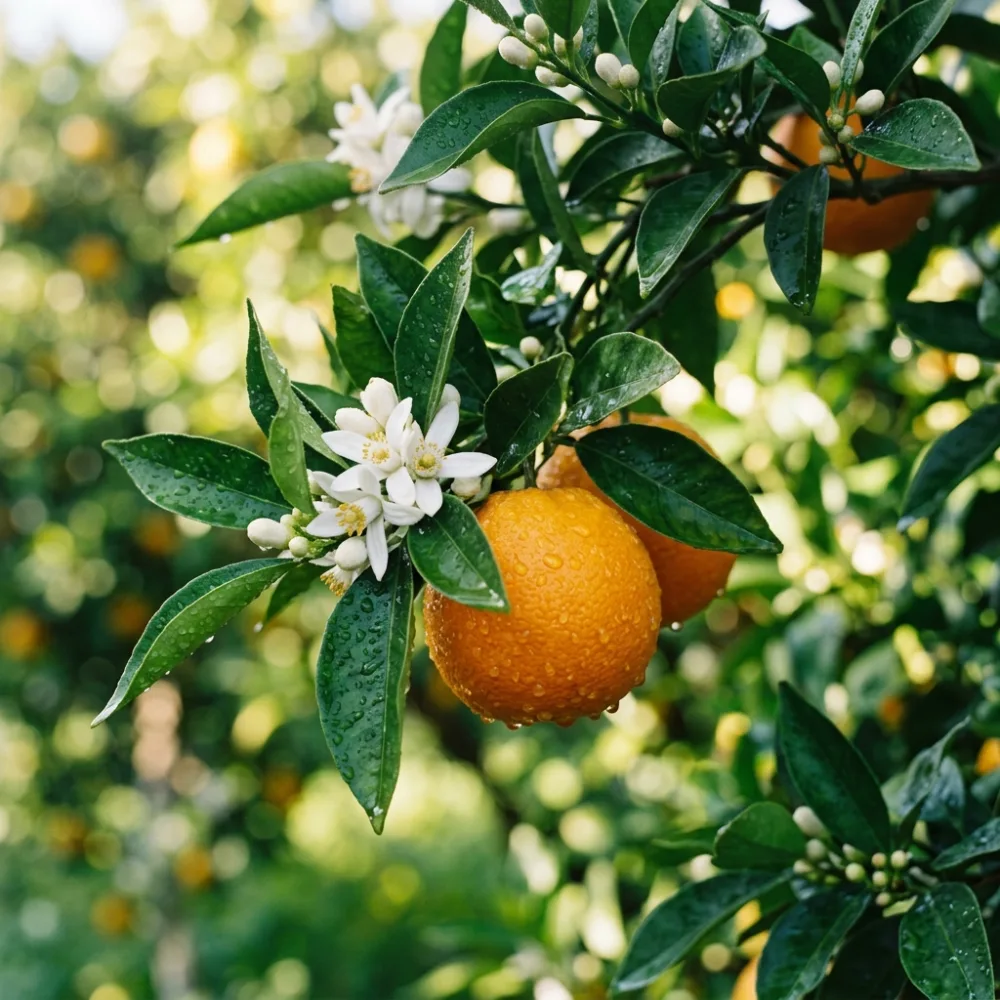
Citrus oils are the friendliest corner of aromatherapy: bright, uplifting, affordable, and easy to blend. But they hide two important quirks, some are phototoxic and some aren’t, and one tree gives three completely different oils. Here’s the whole citrus family sorted out.
The sweet, sun-safe citruses
Cold-pressed but generally non-phototoxic, safe for daytime skin use:
- Sweet Orange, ~90%+ limonene, the cheerful classic (composition).
- Tangerine / Mandarin, soft, sweet, and gentle (composition).
The phototoxic citruses
Bright and wonderful, but keep treated skin out of the sun for 12–18 hours (details in our phototoxic oils guide):
- Lemon, limonene-rich and confirmed phototoxic.
- Lime, cold-pressed lime is strongly phototoxic.
- Grapefruit, mildly phototoxic.
- Jade Lemon, a lemon-type citrus; treat like lemon.
The bitter-orange tree’s three oils
One plant, Citrus aurantium, gives three distinct oils depending on the part used:
- Neroli, from the blossoms; soft, floral, and (being distilled) not phototoxic (composition).
- Petitgrain, from the leaves and twigs; green, calming, and affordable (composition).
- Bitter orange, from the peel (phototoxic like other citrus peels).
Getting the most from citrus oils
- They fade fast. Limonene oxidises quickly, store cool, sealed, dark, and use within about a year.
- Diffuse freely, no citrus oil is phototoxic in the air.
- Blend up. Citrus oils lift almost anything, pair with florals, spices, or woods.
- For sun-safe skin use, reach for sweet orange, tangerine, or a distilled/bergapten-free version.
Bottom line
The citrus oils are the easiest, most joyful oils to use, as long as you remember which are phototoxic (lemon, lime, grapefruit) and which aren’t (sweet orange, tangerine, neroli). And don’t forget the bitter-orange tree quietly gives you three oils in one.
References
- Sweet orange oil composition (2003), Journal of Essential Oil Research. doi:10.1080/10412905.2003.9698624
- Tangerine peel oil characterisation (2022), Foods. doi:10.3390/foods12010057
- Naganuma et al. (1985), phototoxicity of lemon oil, Archives of Dermatological Research. doi:10.1007/bf00412492
- Expressed lime peel oil composition (2000), Journal of Essential Oil Research. doi:10.1080/10412905.2000.9712040
- Grapefruit peel volatiles (2012), Journal of Essential Oil Bearing Plants. doi:10.1080/0972060x.2012.10644122
- Neroli oil composition (2012), Pakistan Journal of Biological Sciences. doi:10.3923/pjbs.2012.1034.1040
- Italian citrus petitgrain oils (1997), Journal of Essential Oil Research. doi:10.1080/10412905.1997.10554241
This article is educational and not medical advice.