
The Journal 2 min read
Forest Bathing at Home: Hinoki, Spruce, Fir and the Shinrin-Yoku Oils
Japanese 'forest bathing' inspired a whole category of grounding conifer oils. Here's how hinoki, hong kuai, hemlock, spruce and fir bring the forest indoors.
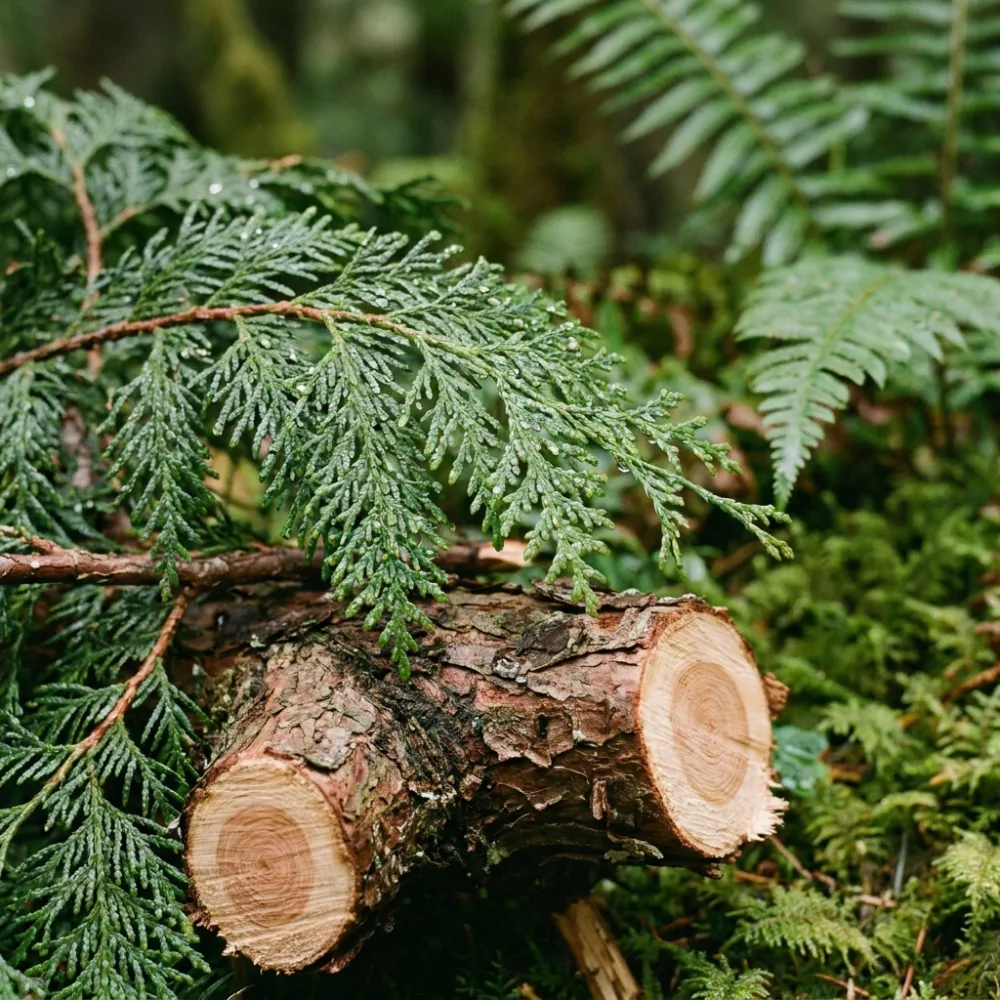
Shinrin-yoku, Japanese “forest bathing”, is the simple practice of spending calm, attentive time among trees. You can’t bottle a forest, but the conifer wood and needle oils get remarkably close, and they’ve become a whole grounding category of their own. Here’s how to build the forest indoors.
The Japanese cypress woods
- Hinoki, Japanese cypress, the quintessential forest-bathing wood, sesquiterpene-rich with antimicrobial hinokitiol (study). Clean, soft, and deeply calming.
- Hong Kuai, Taiwan cypress, a close relative of hinoki with a similar soft-wood character (composition).
The spruces, firs and hemlock
Soft, sweet, bornyl-acetate-rich needle oils that smell like a snow-dusted forest:
- Northern Lights Black Spruce, a grounding classic (composition).
- Idaho Blue Spruce, in the same soft-spruce mould.
- Idaho Grand Fir, brighter and greener (composition).
- Tsuga, eastern hemlock, gentle and sweet (composition).
The warm woods and resins that complete it
- Cedarwood, a warm, dry-wood anchor (composition).
- Cistus, a warm, ambery resin note for depth.
A forest-bathing blend
In a diffuser for a grounding, quiet atmosphere:
- 2 drops hinoki or black spruce (the forest heart)
- 2 drops grand fir or tsuga (fresh needles)
- 1 drop cedarwood (warm wood base)
Why it feels calming
Part of it is simple association, these aromas are the forest. The conifers are also gentle, non-phototoxic, and heavy enough to feel grounding rather than stimulating. Keep them fresh (pinene-rich oils oxidise), diffuse in a calm space, and give yourself a few slow minutes, the forest-bathing part is as much about attention as aroma.
Bottom line
Hinoki, hong kuai, spruce, fir, hemlock, and cedarwood let you recreate the quiet, grounding feeling of a walk among trees. Blend a soft wood, some fresh needles, and a warm base, slow down, and breathe.
References
- Hinoki (Chamaecyparis obtusa) oil (2015), PLOS ONE. doi:10.1371/journal.pone.0143450
- Chamaecyparis formosensis (hong kuai) oil (2005), Holzforschung. doi:10.1515/hf.2005.049
- Black spruce oil (2017), BioResources. doi:10.15376/biores.12.2.2635-2645
- Abies grandis (grand fir) study (2025), Journal of Essential Oil and Plant Composition. doi:10.58985/jeopc.2025.v03i02.69
- Tsuga canadensis volatiles (2003), Phytochemistry. doi:10.1016/s0031-9422(02)00518-6
- Atlas cedarwood oil (2004), Journal of Essential Oil Research. doi:10.1080/10412905.2004.9698793
This article is educational and not medical advice.