
The Journal 2 min read
Conifer & Forest Oils for Grounding: Spruce, Fir, Pine, Cypress and More
Spruce, fir, pine, cypress, hemlock and Japanese hinoki share a fresh, grounding 'forest' character. Here's how the conifer oils differ, what's in them, and how to use them.
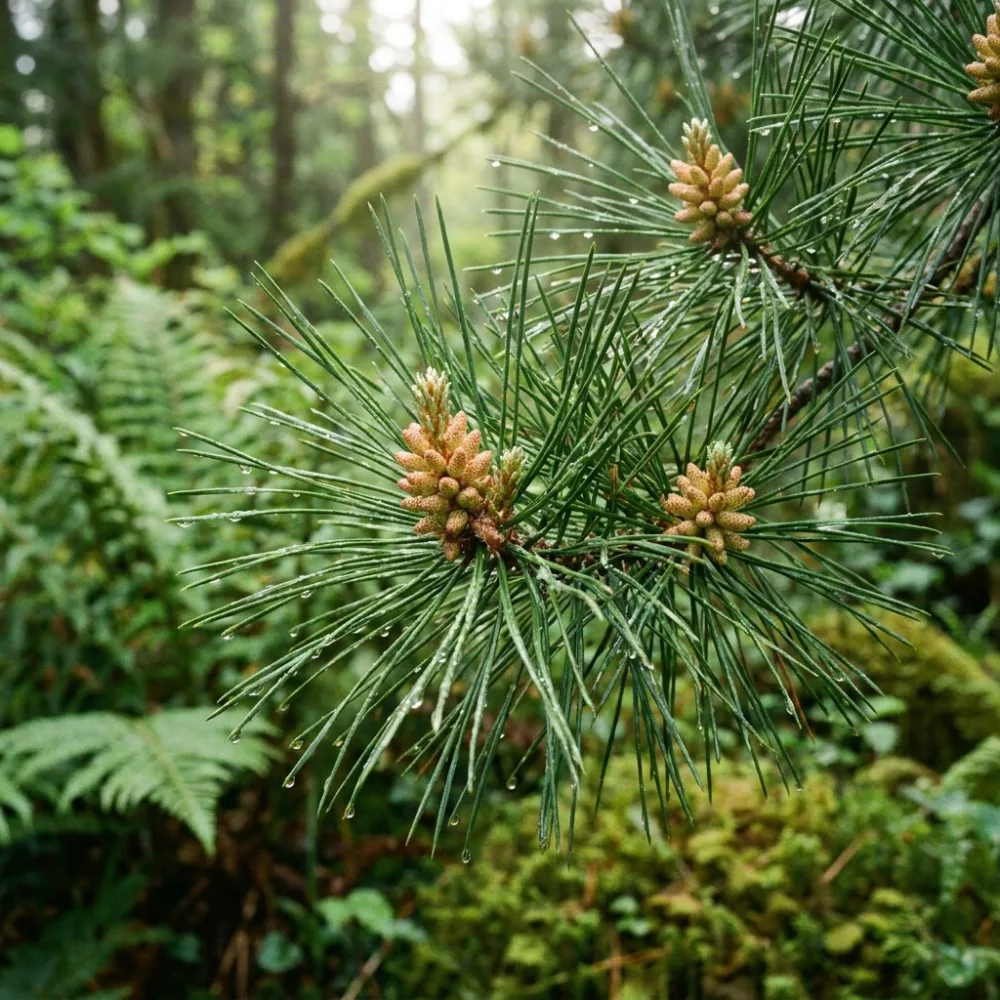
There’s a reason a walk through evergreens feels calming, and a reason “forest bathing” caught on. The conifer essential oils capture that fresh, resinous, grounding character, and while they smell related, their chemistry and personalities differ in useful ways. Here’s a guide to the whole family.
The two chemical “styles” of conifer oil
Most conifer needle and wood oils lean one of two ways:
- Pinene-forward, sharp, fresh, resinous (the “pine” smell), driven by α- and β-pinene.
- Bornyl-acetate-forward, softer, sweeter, more grounding (the “spruce/fir” smell).
Both oxidise over time, so the golden rule for all of them is: store cool, sealed, and out of light, since oxidised conifer oil is more likely to irritate skin.
Pines and cypresses (sharp & fresh)
- Pine, Scots pine needle oil, α-pinene-rich, the archetypal crisp forest scent, per needle-oil composition work.
- Cypress, α-pinene and δ-3-carene give a dry, clean, evergreen aroma (composition study).
- Juniper, juniper berry oil, α-pinene-led, the familiar gin-adjacent scent (composition and antioxidant study).
- Blue Cypress, an Australian wood oil, softer and guaiazulene-tinted (and blue!).
Spruces and firs (soft & grounding)
- Northern Lights Black Spruce, bornyl-acetate- and camphene-rich, a classic grounding spruce (composition).
- Idaho Blue Spruce, a Picea pungens spruce in the same soft, forest-fresh mould.
- Idaho Grand Fir, a bright, green fir led by β-pinene and β-phellandrene (Abies grandis study).
- Tsuga, eastern hemlock, bornyl-acetate-rich and gently sweet (Tsuga canadensis volatiles).
The cedar and Japanese cypress woods
- Cedarwood, Atlas cedarwood, a himachalene-rich, warm dry-wood base note (composition).
- Hinoki, Japanese cypress, central to shinrin-yoku (forest bathing), sesquiterpene-rich with antimicrobial hinokitiol (study).
- Hong Kuai, Taiwan cypress, a close relative of hinoki (composition and antifungal study).
How to use them
- Diffuse for a grounding, forest-air atmosphere, they pair beautifully with citrus and with each other.
- Dilute for skin; these are gentle oils but still benefit from a carrier.
- Blend across the family, a pinene-sharp pine with a soft bornyl-acetate spruce and a cedarwood base makes a rich, three-dimensional “forest” accord.
Bottom line
The conifer oils give you the whole forest: sharp pines and cypresses, soft spruces and firs, and warm cedar and hinoki woods. Learn the pinene-vs-bornyl-acetate split, keep them fresh, and you can build grounding blends with real depth.
References
- Pine needle oil composition (2007), The Scientific World Journal. doi:10.1100/tsw.2007.36
- Cypress oil composition and activity (2014), BMC Complementary and Alternative Medicine. doi:10.1186/1472-6882-14-179
- Höferl et al. (2014), juniper composition and antioxidant properties, Antioxidants. doi:10.3390/antiox3010081
- Black spruce (Picea mariana) oil (2017), BioResources. doi:10.15376/biores.12.2.2635-2645
- Tsuga canadensis volatiles (2003), Phytochemistry. doi:10.1016/s0031-9422(02)00518-6
- Hinoki (Chamaecyparis obtusa) oil (2015), PLOS ONE. doi:10.1371/journal.pone.0143450
This article is educational and not medical advice.