
The Journal 2 min read
Essential Oils for Meditation and Grounding: The Resins and Sacred Woods
Frankincense, myrrh, sacred frankincense, palo santo, sandalwood and elemi have anchored contemplative practice for millennia. Here's the chemistry behind the grounding resin and wood oils.
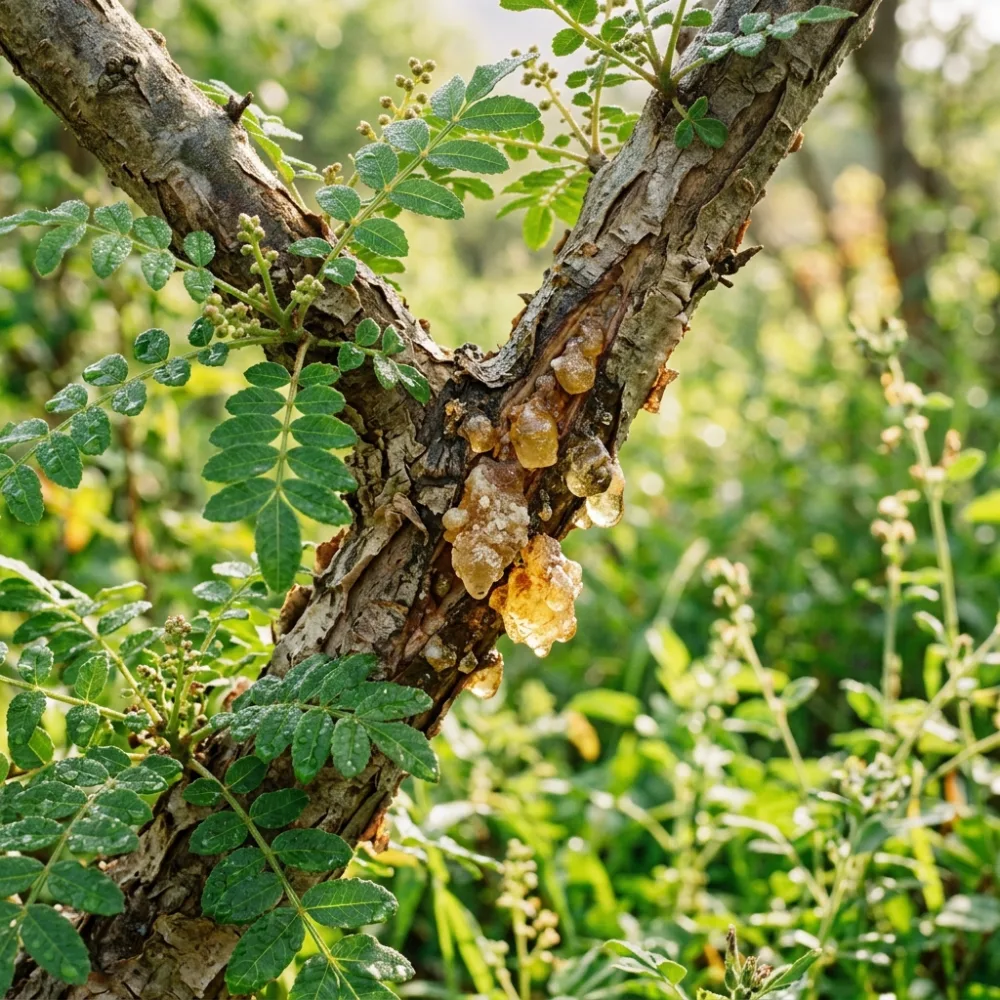
Long before aromatherapy, resins and fragrant woods were burned in temples and ceremonies across the world. The oils distilled from them keep that deep, grounding, contemplative character, heavy, slow, and calming. Here’s the meditation-and-grounding lineup.
The sacred resins
- Frankincense, the quintessential meditation resin, α-pinene-rich (composition); slow, warm, and centring.
- Sacred Frankincense, the Boswellia sacra type from Oman, a premium grade of the same family.
- Myrrh, frankincense’s ancient partner, deep and bitter-balsamic (composition).
- Elemi, a brighter, lemony-resinous relative (composition).
The sacred woods
- Palo Santo, “holy wood”, used in South American ceremony, bright and sweet over resin (composition); choose sustainably fallen wood.
- Royal Hawaiian Sandalwood, the classic meditation wood, creamy santalol-rich, from a managed source (composition).
- Vetiver, an earthy root oil that grounds a blend like nothing else (composition).
- Cistus, a warm, ambery resin for depth (composition).
Why they suit contemplative practice
These are all heavy, slow, non-phototoxic oils built on resins and sesquiterpenes. They diffuse gently, linger, and feel grounding rather than stimulating, the opposite of a bright citrus. That physical quality, plus millennia of ceremonial association, is why they anchor meditation blends so well.
A grounding blend
In a diffuser before meditation or rest:
- 2 drops frankincense (the heart)
- 1 drop sandalwood or vetiver (grounding base)
- 1 drop palo santo or elemi (a bright resinous lift)
Bottom line
Frankincense, myrrh, sacred frankincense, elemi, palo santo, sandalwood, vetiver, and cistus are the grounding oils, heavy, resinous, and steeped in contemplative tradition. Diffuse a small, slow blend, choose sustainably sourced woods, and let them do what they’ve done for thousands of years.
References
- Frankincense (Boswellia sacra) composition (2025), Food Science & Nutrition Technology. doi:10.23880/fsnt-16000361
- Myrrh oil constituents (2003), Journal of Essential Oil Research. doi:10.1080/10412905.2003.9712264
- Elemi oil activities (2023), Journal of Essential Oil Bearing Plants. doi:10.1080/0972060x.2023.2165167
- Bursera graveolens (palo santo) composition (2022), BLACPMA. doi:10.37360/blacpma.22.21.4.28
- Hawaiian sandalwood composition (2014), Natural Product Communications. doi:10.1177/1934578x1400900936
- Vetiver cultivar study (1991), Journal of Essential Oil Research. doi:10.1080/10412905.1991.9697986
- Cistus ladanifer leaf oil (2009), Journal of Essential Oil Research. doi:10.1080/10412905.2009.9700140
This article is educational and not medical advice.