
The Journal 2 min read
Essential Oils for Skin and Complexion, What's Actually Worth It
Carrot seed, helichrysum, rose, geranium, frankincense and copaiba turn up in every 'oils for skin' list. Here's the honest chemistry behind the skincare favourites, and how to use them.
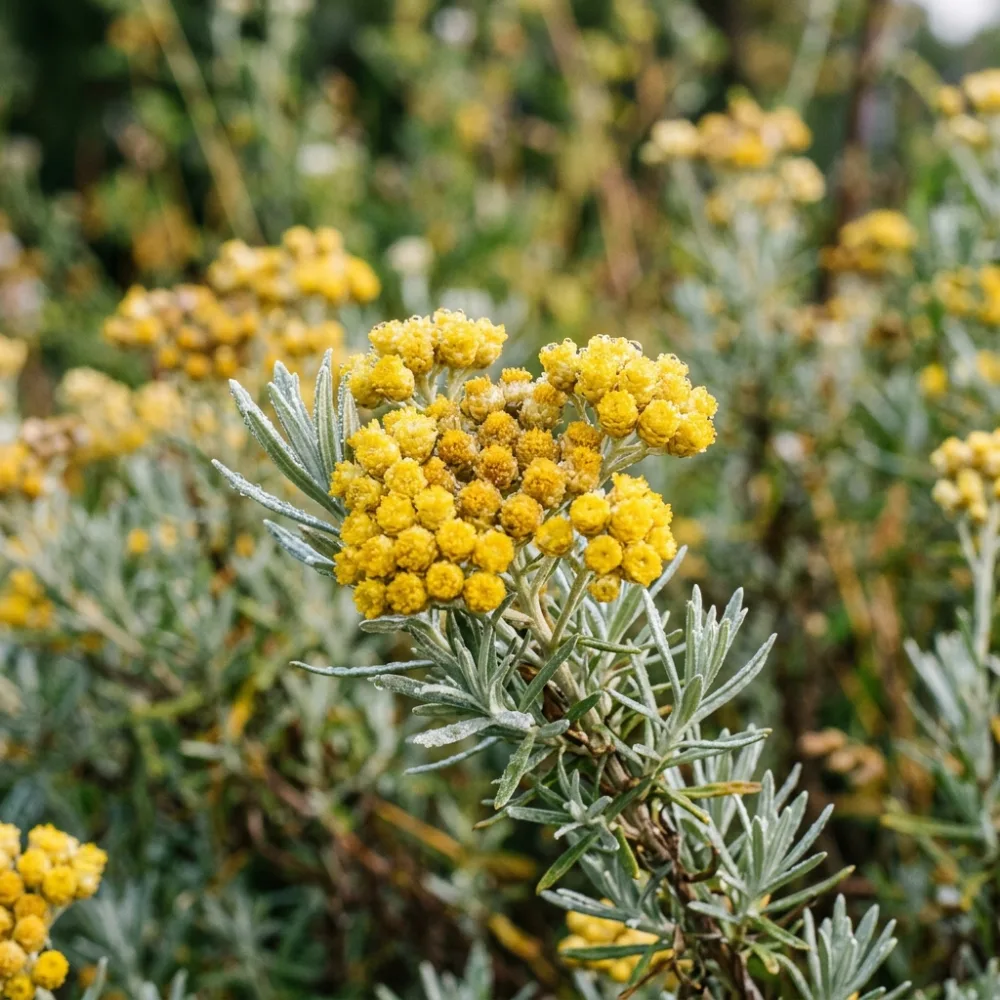
Essential oils are everywhere in natural skincare, and the marketing runs far ahead of the evidence. The oils below are the genuine favourites, gentle, well-characterised, and pleasant in a facial blend, but they’re best understood as nice additions to a carrier oil, not treatments. Here’s the honest guide.
The skincare favourites
- Carrot Seed, a carotol-rich oil popular in facial blends (composition). One myth to bust: it is not a sunscreen, there’s no reliable evidence it provides meaningful SPF.
- Helichrysum and Corsican Helichrysum, the “immortelle” oils, neryl-acetate-rich and among the priciest (composition); popular for their soothing reputation, which is largely traditional.
- Rose, citronellol/geraniol-rich, luxurious and gentle (composition).
- Frankincense, an α-pinene-rich resin oil beloved in facial serums (composition).
The gentle supporting oils
- Geranium and Geranium Bourbon, balancing, rosy, and affordable (composition).
- Palmarosa, a geraniol-rich grass oil widely used in skincare (composition).
- Copaiba, β-caryophyllene-rich and very gentle, often paired with others in soothing blends (composition).
How to use oils on skin safely
- Always dilute in a carrier oil (jojoba, sweet almond), typically 1–2% for the face.
- Patch-test, several of these contain geraniol, citronellol, or linalool, recognised allergens.
- Avoid phototoxic oils on skin before sun, see our phototoxic oils guide; the skincare oils above are non-phototoxic.
- Manage expectations, these are lovely, low-risk additions, not clinical treatments for skin conditions.
Bottom line
Carrot seed, helichrysum, rose, frankincense, geranium, palmarosa, and copaiba are the skincare oils genuinely worth having, gentle, well-characterised, and pleasant in a diluted facial oil. Just skip the hype (no, carrot seed isn’t sunscreen) and treat them as nourishing extras.
References
- Carrot seed oil composition (2001), Journal of Essential Oil Research. doi:10.1080/10412905.2001.9699720
- Corsican Helichrysum italicum study (2022), PLOS ONE. doi:10.1371/journal.pone.0268384
- Rose oil composition (2007), Journal of Essential Oil Research. doi:10.1080/10412905.2007.9699241
- Frankincense (Boswellia sacra) composition (2025), Food Science & Nutrition Technology. doi:10.23880/fsnt-16000361
- Geranium oil composition (2015), Phytothérapie. doi:10.1007/s10298-015-0950-2
- Palmarosa composition and activity (2025), Pharmaceutics. doi:10.3390/pharmaceutics18010039
- Copaiba oil identity (2026), Food Chemistry Advances. doi:10.1016/j.focha.2026.101269
This article is educational and not medical advice. For persistent skin concerns, see a dermatologist.