
The Journal 2 min read
Essential Oils for Sensitive and Irritated Skin: The Soothing Blues and Gentle Oils
German chamomile, blue tansy, blue yarrow, carrot seed and helichrysum are the go-to oils for calming, sensitive-skin blends. Here's the chemistry and how to use them gently.
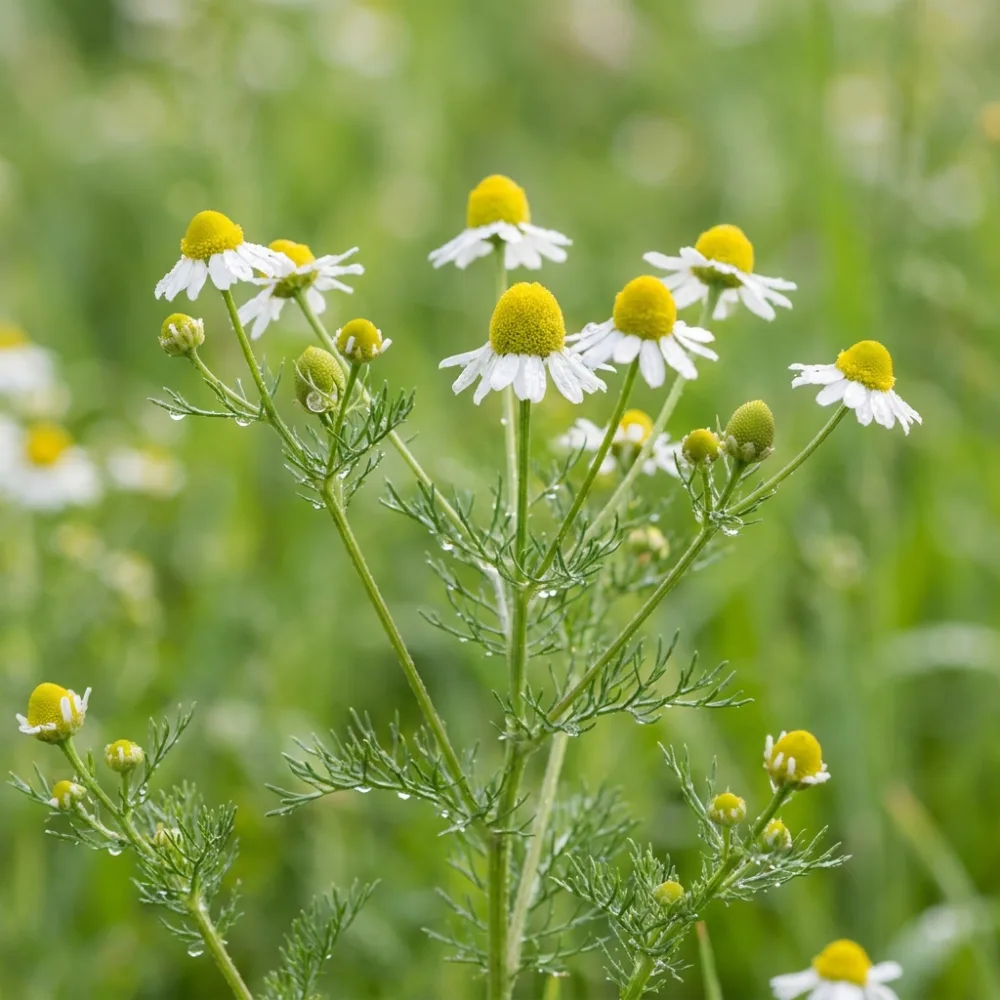
When skin is reactive or irritated, the last thing it needs is a harsh, phenol-rich oil. A small group of gentle, soothing oils, several of them a beautiful blue, are the ones traditionally chosen for calming blends. Here’s how to use them, with honest expectations.
The soothing blue oils
Their blue colour comes from azulene compounds formed during distillation, studied for anti-inflammatory activity in the lab (see our blue oils explainer):
- German Chamomile, rich in α-bisabolol and chamazulene, the classic soothing blue (composition).
- Blue Tansy, sabinene- and chamazulene-rich, gentle and calming (composition).
- Blue Yarrow, chamazulene-containing yarrow with a long herbal history (composition).
The gentle skincare oils
- Carrot Seed, a mild, carotol-rich oil popular in facial blends (composition).
- Helichrysum, “immortelle”, prized (and pricey) for soothing skincare (composition).
- Roman Chamomile, one of the gentlest oils of all, ester-rich and calming (composition).
- Lavender, the all-rounder; gentle when fresh (oxidised lavender is more sensitising).
Using them on reactive skin
- Dilute low, 1% or less on the face for sensitive skin.
- Patch-test every time, even gentle oils can react on already-irritated skin; some contain trace allergens.
- Simpler is safer, fewer oils, lower concentration.
- Mind the stain, the blue oils transfer colour to fabric and light surfaces.
- Manage expectations, these are soothing, low-risk additions to a carrier oil, not treatments for a skin condition; see a professional for anything persistent.
Bottom line
For sensitive or irritated skin, reach for the gentle, soothing oils, German chamomile, blue tansy, blue yarrow, carrot seed, helichrysum, roman chamomile, and lavender, kept well diluted and patch-tested. Skip the harsh phenol oils entirely here.
References
- German chamomile composition (2016), Foods. doi:10.3390/foods5030056
- Tanacetum annuum (blue tansy) oil (1999), Journal of Essential Oil Research. doi:10.1080/10412905.1999.9701150
- Yarrow essential oil composition (2023), Studia Universitatis Babeș-Bolyai Chemia. doi:10.24193/subbchem.2023.1.11
- Carrot seed oil composition (2001), Journal of Essential Oil Research. doi:10.1080/10412905.2001.9699720
- Corsican Helichrysum italicum study (2022), PLOS ONE. doi:10.1371/journal.pone.0268384
- Roman chamomile composition (1998), Journal of Essential Oil Research. doi:10.1080/10412905.1998.9700974
This article is educational and not medical advice. For persistent skin irritation or a suspected reaction, see a healthcare professional.