
The Journal 2 min read
The Resin Oils: Frankincense, Myrrh, Elemi, Copaiba and Cistus
Frankincense, myrrh and their relatives come from tree resins, not flowers or leaves. Here's what's really in them, including the honest truth about frankincense and boswellic acids.
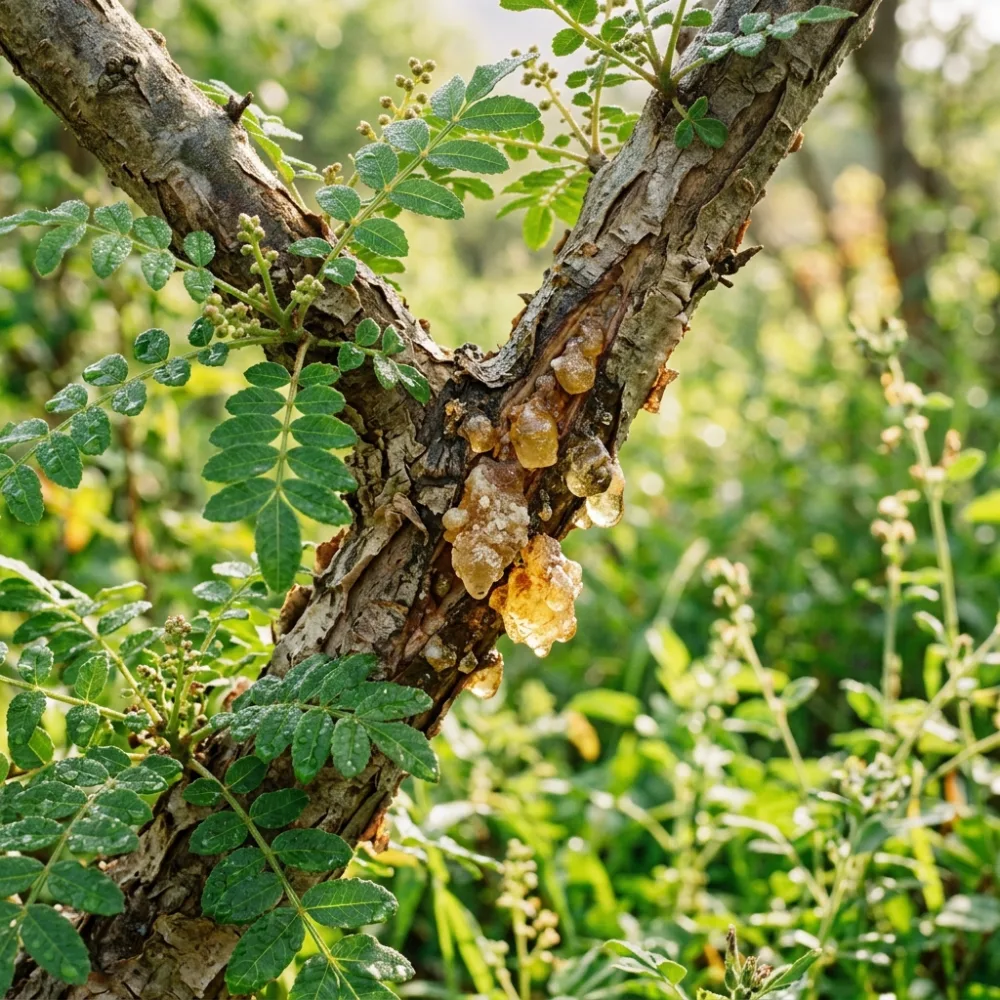
Some of the oldest aromatics in human history aren’t distilled from flowers or leaves at all, they come from tree resins, the sticky sap that hardens into “tears” when bark is tapped. These resin oils share a warm, balsamic depth, and a couple of honest caveats worth knowing before you buy.
Frankincense, and the boswellic-acid myth
- Frankincense (Boswellia carterii/sacra) is α-pinene-dominant, per compositional work.
- Sacred Frankincense is the Boswellia sacra type from Oman, a premium grade, chemically a close cousin.
The honest part: the famous boswellic acids studied for inflammation are heavy, non-volatile molecules that stay in the resin, they’re largely absent from the steam-distilled oil. So don’t assume resin-extract research applies to the essential oil. It’s a beautiful aromatic oil; it isn’t a boswellic-acid supplement.
Myrrh, frankincense’s ancient partner
- Myrrh (Commiphora myrrha) is rich in furanosesquiterpenes like furanoeudesma-1,3-diene, per constituent analysis. Warm, bitter-balsamic, and traditionally paired with frankincense. Best avoided in pregnancy.
The brighter resins
- Elemi (Canarium luzonicum), a limonene-rich resin oil with the signature alcohol elemol; fresh and lemony-peppery over a soft balsamic base (activity study).
- Copaiba (Copaifera), one of the richest natural sources of β-caryophyllene, a much-studied sesquiterpene, per oil-identity work. Gentle and soft.
- Cistus (Cistus ladanifer, “rock rose”/labdanum), a pinene-rich, warm ambery oil long used in perfumery (leaf-oil study).
How to use resin oils
- Diffuse for warm, grounding, meditative atmospheres, they anchor citrus and floral blends beautifully.
- Dilute for skin (frankincense and elemi are popular in facial oils at 1–3%).
- They age well, unlike citrus oils, resin oils are stable and their aromas deepen over time.
Bottom line
The resin oils bring warmth and depth no flower or leaf oil can match. Enjoy frankincense and sacred frankincense for their aroma, just know the boswellic-acid claims belong to the resin, not the oil, and reach for elemi, copaiba, and cistus when you want brighter or softer resinous notes.
References
- Frankincense (Boswellia sacra) of Oman, composition (2025), Food Science & Nutrition Technology. doi:10.23880/fsnt-16000361
- Efferth & Oesch (2011/2022), boswellic acids, Forum on Immunopathological Diseases and Therapeutics. doi:10.1615/forumimmundisther.2012004432
- Marcotullio et al. (2003), constituents of myrrh oil, Journal of Essential Oil Research. doi:10.1080/10412905.2003.9712264
- Elemi oil activities (2023), Journal of Essential Oil Bearing Plants. doi:10.1080/0972060x.2023.2165167
- Copaiba oil identity (2026), Food Chemistry Advances. doi:10.1016/j.focha.2026.101269
- Cistus ladanifer leaf oil (2009), Journal of Essential Oil Research. doi:10.1080/10412905.2009.9700140
This article is educational and not medical advice.