
The Journal 3 min read
Does Lavender Oil Actually Help You Sleep? What the Research Shows
Lavender is the go-to oil for bedtime, but does the science back it up? Here's what controlled studies say about lavender for sleep and calm, plus how to use it safely.
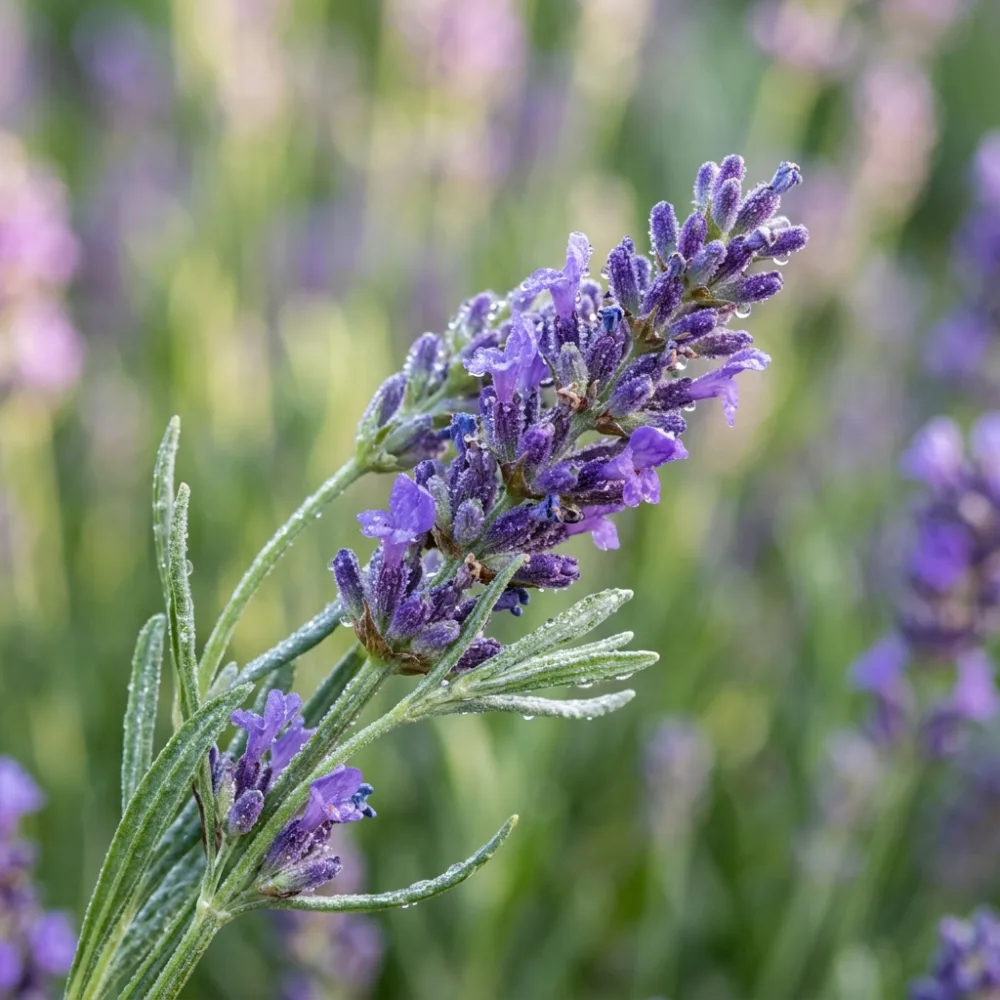
Lavender is the first oil almost everyone reaches for at bedtime, and unlike a lot of aromatherapy folklore, this one has a reasonable amount of actual research behind it. It’s not a sleeping pill, but the evidence is more encouraging than for most essential oils. Here’s an honest look at what the studies show and how to get the most from it.
What’s actually in lavender
Steam-distilled lavender (Lavandula angustifolia) is dominated by two soft, floral molecules: linalool and linalyl acetate, which together usually make up more than half the oil, as gas-chromatography analyses have mapped. These are the constituents most associated with lavender’s calming character, and, when the oil oxidises, also the ones behind its main skin caution (more on that below).
The sleep evidence
The most relevant work looks at people who actually struggle to sleep. In one randomized trial in hospital patients, inhaled lavender improved reported sleep quality. Several similar small trials across different settings point the same direction: modest but real improvements in how people rate their sleep.
The honest caveats: these studies are small, they rely on self-reported sleep rather than lab sleep measurement, and “improved sleep-quality score” is not the same as curing insomnia. But for a low-risk, pleasant intervention, the risk-to-benefit balance is genuinely favourable.
The calm-and-anxiety angle
Sleep and anxiety are tangled together, and lavender has been studied for the anxiety side too. An oral standardised lavender-oil preparation (marketed as Silexan) has been tested in randomized trials for anxiety, including mixed anxiety-depression, with positive results. That’s an oral capsule under medical supervision, not the same as diffusing oil at home, but it suggests lavender’s calming reputation isn’t pure placebo.
How to actually use it for sleep
- Diffuse a few drops in the bedroom 30–60 minutes before bed. This is the simplest, safest route.
- On a tissue or pillow edge (not directly on skin you’ll sleep against) for a subtler effect.
- Diluted on skin, a drop or two in a carrier oil for a bedtime hand or foot massage. Always dilute.
One real safety note
Lavender is one of the gentlest oils, but oxidised lavender is a different story: once linalool and linalyl acetate break down through air exposure, they become far more likely to cause skin sensitisation. Keep the bottle cool, sealed, and out of light, and replace old oil that smells sharp or “off”.
Bottom line
Lavender for sleep is one of the better-supported uses in all of aromatherapy, genuinely helpful for many people as part of a wind-down routine, though not a substitute for treating a real sleep disorder. If bedtime is a struggle, it’s a low-risk thing to try.
For the full sourced chemistry and safety panel, see our complete Lavender profile. And if you want a daytime counterpart, bergamot is the classic uplifting citrus, just mind its phototoxicity.
References
- Śmigielski et al. (2013), chemical composition of lavender oil, Journal of Essential Oil Research. doi:10.1080/10412905.2013.775080
- Mahdavikian et al. (2020), lavender aromatherapy and sleep quality, Sleep Science and Practice. doi:10.1186/s41606-020-00047-x
- Kasper et al. (2016), efficacy of Silexan in mixed anxiety–depression, European Neuropsychopharmacology. doi:10.1016/j.euroneuro.2015.12.002
- Bråred Christensson et al. (2012), oxidised lavender and skin sensitisation, Contact Dermatitis. doi:10.1111/j.1600-0536.2012.02134.x
This article is educational and not medical advice. If you have a persistent sleep problem, talk to a qualified healthcare professional.