
The Journal 2 min read
Why Are Some Essential Oils Blue? Chamazulene and Guaiazulene Explained
German chamomile, blue tansy, blue yarrow and blue cypress are genuinely deep blue, and the colour appears only during distillation. Here's the chemistry, and how these oils differ.
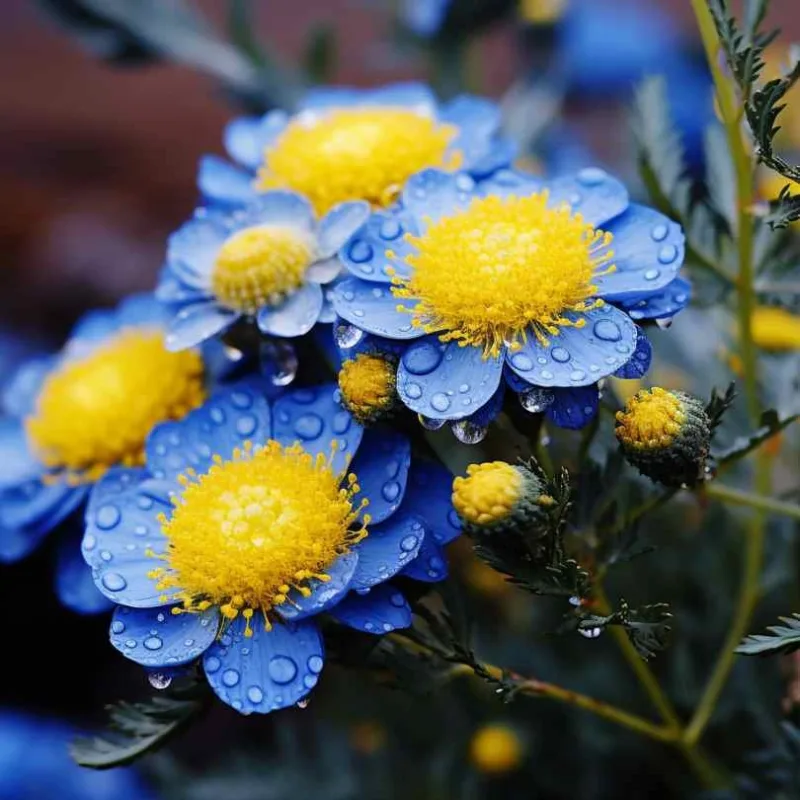
A handful of essential oils are a startling ink-blue in the bottle, and it always surprises people that the flowers and wood they come from aren’t blue at all. The colour is created during steam distillation, when heat transforms colourless precursors into deep-blue azulene compounds. Here’s what’s happening and how the blue oils differ.
The two blue-making molecules
- Chamazulene forms from precursors (like matricin) in certain daisy-family plants during distillation. It’s studied for anti-inflammatory and skin-soothing activity in the lab.
- Guaiazulene forms from guaiol-type compounds in certain woods. Different source, similar vivid blue.
Neither is present in the fresh plant, which is why you can’t predict the colour from the flower, and why distillation method affects how blue the oil turns out.
The chamazulene blues
- German Chamomile, the classic blue oil, rich in α-bisabolol and chamazulene, as compositional work shows. Gentle and soothing.
- Blue Tansy, Tanacetum annuum from Morocco, sabinene- and chamazulene-rich per a Moroccan oil study. Crucially not the same as toxic common tansy (T. vulgare).
- Blue Yarrow, Achillea millefolium; chamazulene-containing chemotypes give a blue oil, though not every yarrow is deeply blue.
The guaiazulene blue
- Blue Cypress, an Australian wood oil (Callitris) whose blue comes from guaiazulene, alongside guaiol, per a study of cypress-pine azulenes. A different blue from the chamomile family.
Practical notes
- They stain. That gorgeous blue transfers readily to fabric and light surfaces, dilute and handle carefully.
- Colour is a quality clue, not a guarantee. Deeper blue generally means more azulene, but always check the botanical name (especially blue tansy vs common tansy).
- They’re base-to-middle notes, a little adds soothing depth and a beautiful colour to a blend.
Bottom line
The blue oils earn their colour in the still, not the field. German chamomile, blue tansy, and blue yarrow owe their hue to chamazulene; blue cypress to guaiazulene. All are prized for soothing, grounding blends, just mind the staining and, for blue tansy, the all-important species check.
References
- Ghasemi et al. (2016), chamazulene and bisabolol in German chamomile, Foods. doi:10.3390/foods5030056
- Composition of Tanacetum annuum oil from Morocco (1999), Journal of Essential Oil Research. doi:10.1080/10412905.1999.9701150
- Yarrow (Achillea millefolium) essential oil composition (2023), Studia Universitatis Babeș-Bolyai Chemia. doi:10.24193/subbchem.2023.1.11
- Azulenes from cypress-pines (2001), Journal of Essential Oil Research. doi:10.1080/10412905.2001.9699594
This article is educational and not medical advice.