
The Journal 2 min read
Essential Oils High in 1,8-Cineole, and Why They Need Care Around Young Children
Eucalyptus, rosemary, ravintsara and more share one powerful constituent: 1,8-cineole. Here's what it does, the studies behind it, and the important safety rule for babies and toddlers.
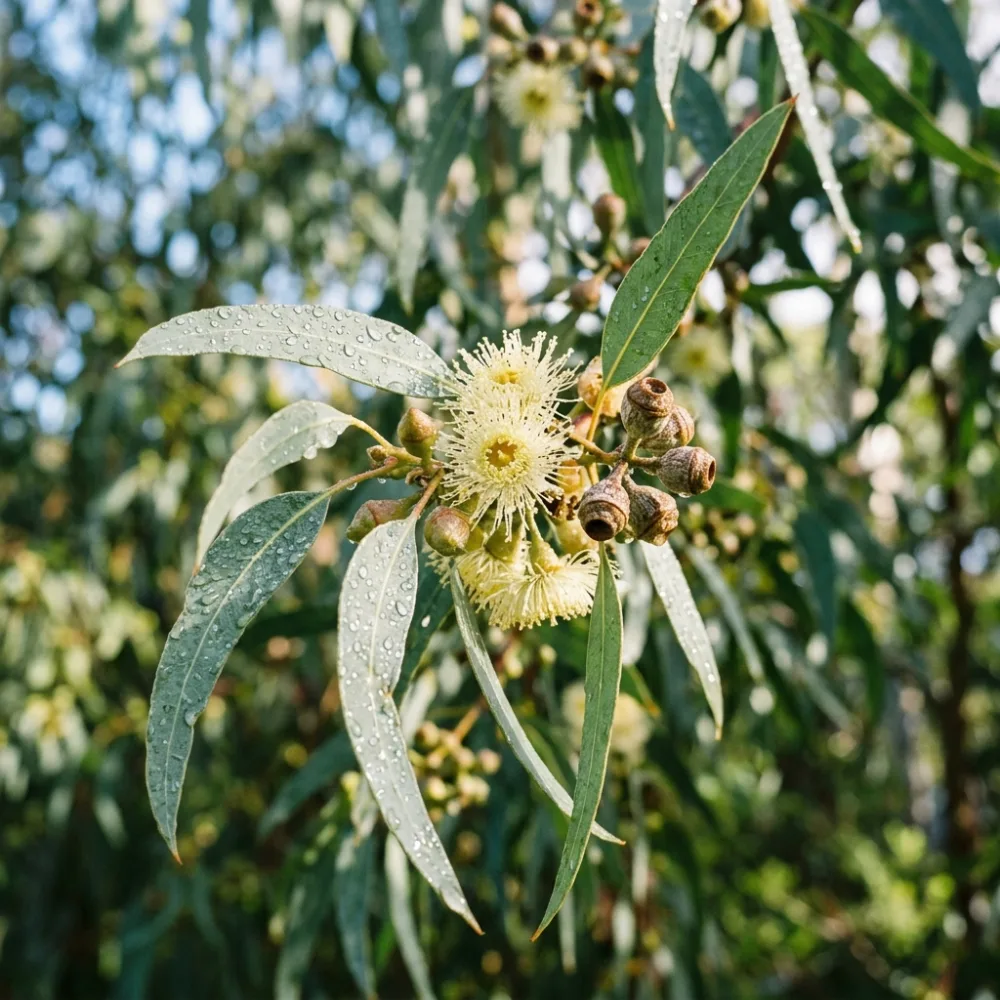
If you’ve ever noticed that eucalyptus, rosemary, and a few others share the same fresh, “clearing” smell, there’s a chemical reason: they’re all rich in 1,8-cineole (also called eucalyptol). It’s one of the most-studied essential-oil constituents, and the reason a specific group of oils comes with a firm caution around infants and young children.
What 1,8-cineole is
1,8-cineole is a fresh, camphoraceous oxide that dominates several unrelated plants. Its main claim to research attention is respiratory: in a randomized controlled trial in acute bronchitis, cineole improved symptoms versus placebo. That’s a study of the isolated compound in a specific condition, encouraging, but not proof that diffusing eucalyptus treats illness.
The important safety rule
Here’s the catch that matters most. Safety reviews specifically warn that cineole-rich oils should never be applied near the face, nose, or chest of infants and young children, where they’ve been linked to breathing difficulties. Keep these oils diluted, diffuse them in a ventilated room rather than applying them, and keep the bottles out of reach. Never let a child ingest them.
The cineole-rich oils
- Eucalyptus and its species globulus (the strongest), radiata (softer), and blue, as composition studies show, globulus can top 75% cineole.
- Rosemary (the ct. 1,8-cineole chemotype), bright and clearing.
- Ravintsara, a cineole-rich Cinnamomum camphora, not to be confused with ravensara.
- Niaouli, a cineole-rich Melaleuca, softer than tea tree.
- Myrtle, cineole-rich but sweeter, often a gentler alternative to eucalyptus.
- Cardamom, warm and spicy, with a notable cineole fraction.
- Dorado Azul, a fresh, cineole-and-sabinene herb oil.
How to use them well
- Diffuse, don’t apply, when children are around, and keep the room ventilated.
- For adults, dilute to a sensible topical percentage; these oils are potent.
- Store cool and sealed, several of these also contain pinenes that oxidise over time.
- Choose the gentler members (radiata, myrtle) when you want the clearing aroma without the intensity of globulus.
Bottom line
1,8-cineole gives this family its fresh, breathe-easy character and its genuine (if preliminary) respiratory research, but it’s exactly why these oils need care around the very young. Diffuse rather than apply near children, dilute for adults, and pick the softer oils when in doubt.
References
- Fischer & Dethlefsen (2013), cineole in acute bronchitis (RCT), Cough. doi:10.1186/1745-9974-9-25
- Balacs (1997), safety of cineole-rich oils around children, International Journal of Aromatherapy. doi:10.1016/s0962-4562(97)80020-3
- Jerbi et al. (2017), eucalyptus oil composition, Journal of Essential Oil Bearing Plants. doi:10.1080/0972060x.2017.1304832
This article is educational and not medical advice. Always consult a professional before using essential oils on or around infants and young children.