
The Journal 2 min read
Does Tea Tree Oil Work for Acne? A Look at the Studies
Tea tree oil is a popular natural acne remedy, and unusually, it has real clinical trials behind it. Here's what the research shows, how it compares to benzoyl peroxide, and how to use it safely.
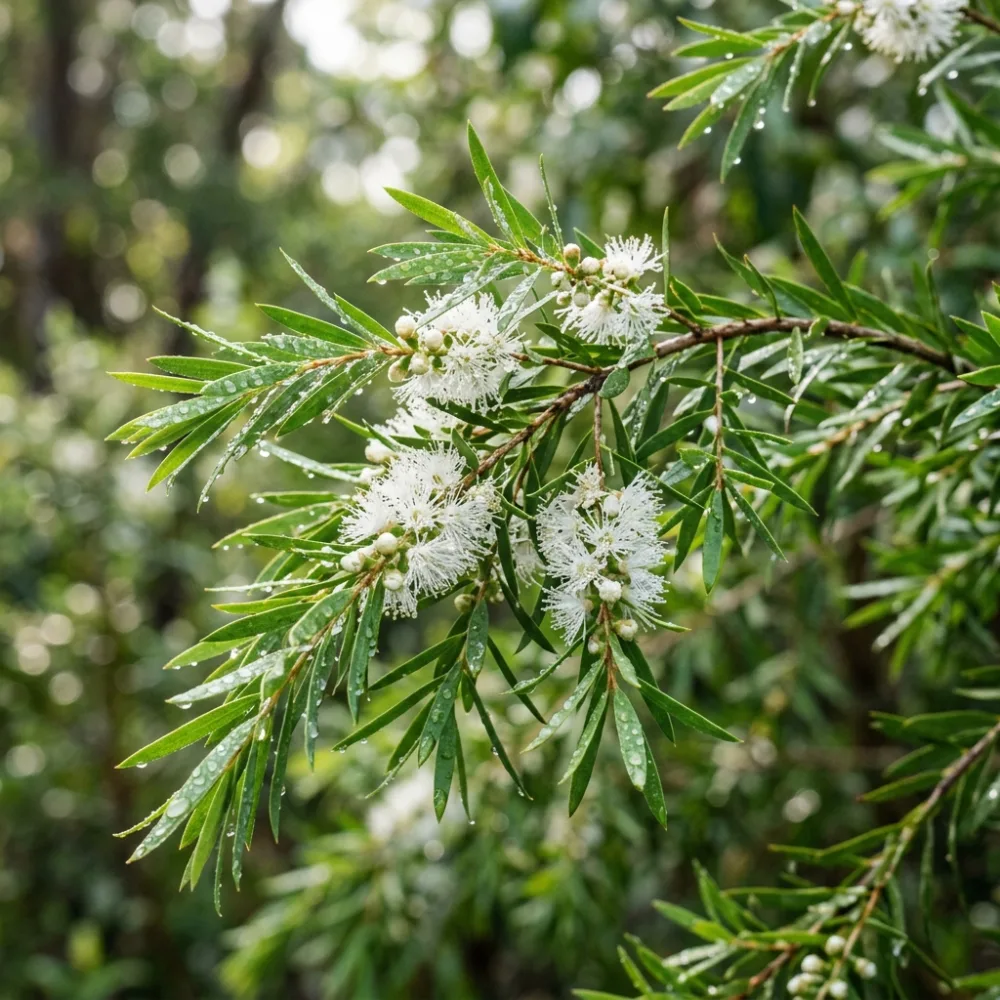
Tea tree oil turns up in countless “natural” spot treatments, and for once the hype has some genuine research behind it. It’s not a miracle cure, and it’s not risk-free, but the clinical evidence for tea tree oil and mild-to-moderate acne is real. Here’s the honest picture.
Why tea tree, chemically
Steam-distilled tea tree (Melaleuca alternifolia) is defined by terpinen-4-ol, which the ISO 4730 standard requires as the main constituent. Terpinen-4-ol carries most of tea tree’s documented antimicrobial activity, shown across many laboratory studies against bacteria and fungi, including Cutibacterium acnes, the bacterium involved in acne. That’s the mechanistic basis for the acne interest.
The clinical evidence
The strongest single piece of evidence is a randomized controlled trial of a 5% tea-tree gel, which found it significantly reduced both inflammatory and non-inflammatory acne lesions compared with placebo in mild-to-moderate acne. Interest in tea tree for acne goes back further, it appeared in the dermatology literature as early as a 1990 report in The Lancet, but the placebo-controlled trial is the clearest support.
The practical read: tea tree is a reasonable, evidence-supported option for milder acne, and it’s often gentler on the skin than harsher conventional treatments, with the trade-off that it tends to act gradually rather than overnight.
How to use it without wrecking your skin
- Never apply neat. Dilute to roughly 5% or lower in a carrier oil or use a ready-made gel at a tested concentration.
- Spot-treat, don’t slather, dab on blemishes rather than coating the whole face.
- Patch-test first, especially if your skin is sensitive.
The real safety catches
- Oxidised tea tree is a common allergen. Once the oil ages and air-oxidises, it’s far more likely to cause contact allergy. Buy fresh, store it cool, sealed, and dark, and replace old bottles.
- Never swallow it, tea tree oil is for topical and aromatic use only, and ingestion can be toxic.
- Toxic to cats and dogs, keep it away from pets entirely.
Bottom line
Tea tree oil is one of the few natural acne remedies with actual randomized-trial support for mild-to-moderate acne. It’s gentler than benzoyl peroxide but slower, needs proper dilution, and must be kept fresh to avoid the allergy risk of oxidised oil. For stubborn or severe acne, see a dermatologist.
For the full sourced chemistry and safety panel, see our complete Tea Tree profile. And for a gentler relative sometimes called “lavender tea tree”, look at rosalina.
References
- Bugarčić et al. (2025), tea tree composition and ISO 4730, Phytomedicine Plus. doi:10.1016/j.phyplu.2025.100846
- Hammer et al. (1998), antimicrobial activity of tea tree oil, Journal of Antimicrobial Chemotherapy. doi:10.1093/jac/42.5.591
- Enshaieh et al. (2007), 5% topical tea-tree gel for mild-to-moderate acne (RCT), Indian Journal of Dermatology, Venereology and Leprology. doi:10.4103/0378-6323.30646
- “Tea-tree oil and acne” (1990), The Lancet. doi:10.1016/0140-6736(90)93127-b
This article is educational and not medical advice. For persistent or severe acne, consult a dermatologist or qualified healthcare professional.